
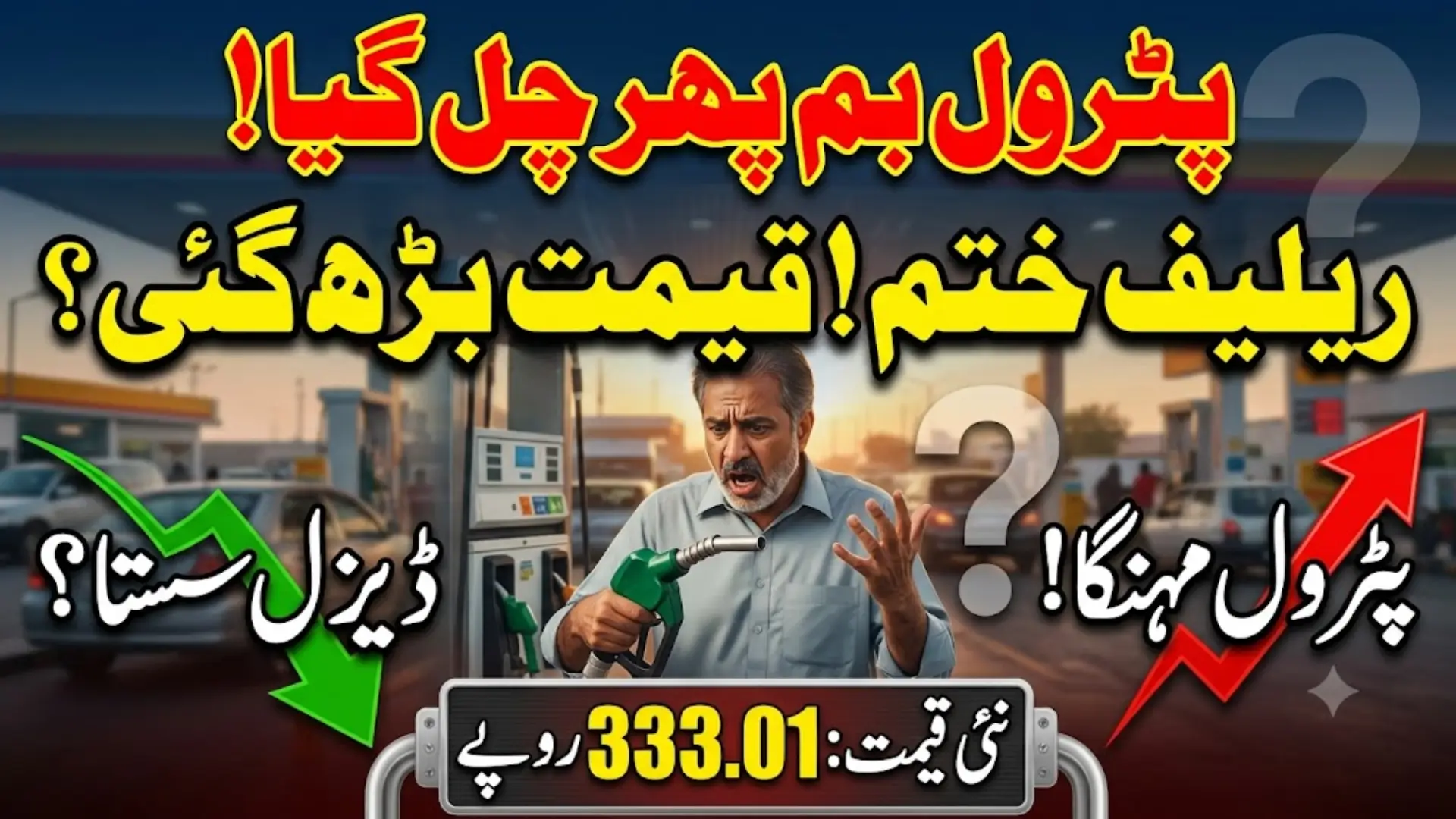
Just when petrol prices seemed to be easing after three straight cuts, they reversed hard. The government raised petrol by Rs4.45 per litre for 6 August, breaking a short run of relief that had lasted less than a week.
Diesel moved the other way, dropping again. Here’s the full breakdown of both rates, why they’re moving in opposite directions so often lately, and what the past few days actually looked like.
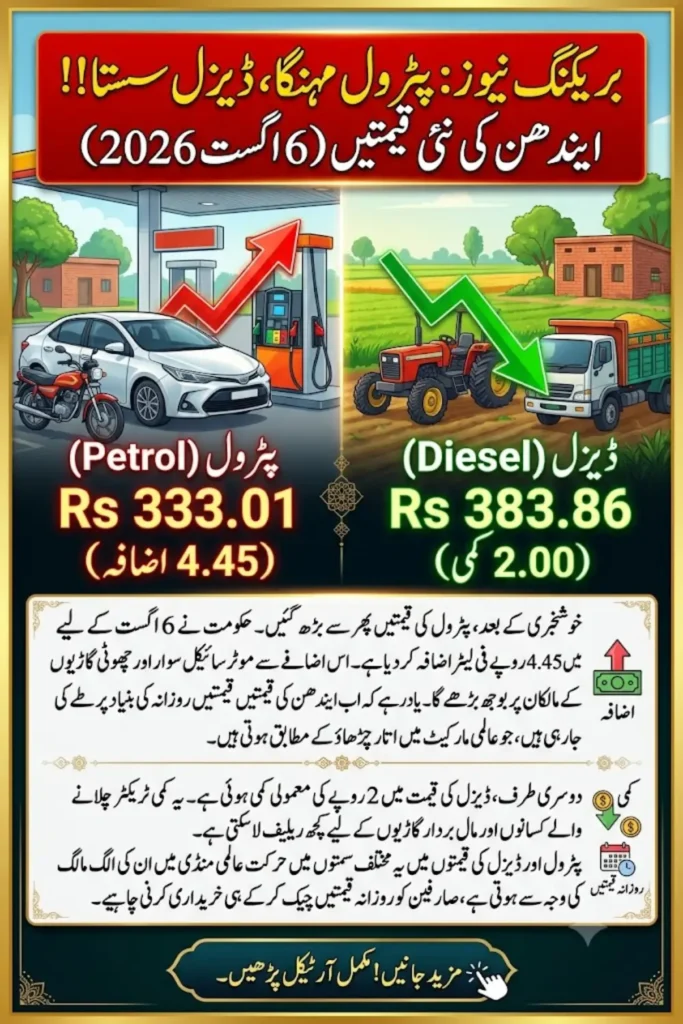
New Petrol and Diesel Prices (6 August 2026)
The Petroleum Division issued a fresh notification through OGRA, effective from midnight on August 6.
| Fuel Type | Previous Rate | New Rate | Change |
|---|---|---|---|
| Petrol | Rs 328.56 | Rs 333.01 | Up Rs 4.45 |
| High-Speed Diesel (HSD) | Rs 385.86 | Rs 383.86 | Down Rs 2.00 |
This marks the first petrol price increase after three consecutive reductions over the previous week, a run that had brought some relief to drivers before this reversal.
The Rollercoaster of the Past Week
Looking at just today’s number without context misses the bigger story. Fuel prices in Pakistan have been swinging sharply, day after day, since the daily pricing system took effect.
On Monday, petrol dropped by Rs4.08 per litre and diesel by Rs2.45. The very next day, petrol fell again by Rs3.39 while diesel dropped a steep Rs4.07. Then today, petrol reversed direction entirely with a Rs4.45 jump, while diesel kept falling by another Rs2.
That’s four price movements in roughly a week, three of them going different directions between petrol and diesel. If you’ve felt like it’s become impossible to predict what you’ll pay at the pump from one day to the next, that instinct is accurate.
Why Petrol and Diesel Keep Moving in Opposite Directions
This isn’t a coincidence or a pricing error. Petrol and diesel are tracked separately under Pakistan’s pricing formula because they trade differently in international markets. Global demand for diesel, driven heavily by industrial use, freight, and agriculture, doesn’t always move in step with demand for petrol, which is largely consumed by private vehicles.
Since OGRA now reviews both fuels daily using a seven-day rolling average of international benchmark prices, even small differences in how each fuel trades internationally can produce opposite-direction swings locally, exactly what’s played out this week.
What’s Actually Driving These Swings
Pakistan moved to this daily pricing system on July 17, specifically because of volatility in global oil markets tied to renewed hostilities in the Middle East. Several factors continue to feed into each day’s revision:
- Decisions made by OPEC+ regarding production levels.
- Ongoing conflict and instability in the Middle East region.
- Sanctions affecting major oil-producing nations.
- Disruptions along critical shipping routes, particularly the Strait of Hormuz and the Red Sea.
Petroleum Minister Ali Pervaiz Malik had explained that the cabinet and prime minister assigned OGRA the task of setting prices daily specifically to keep local rates aligned with these fast-moving global conditions, rather than leaving consumers locked into outdated rates for two weeks at a time.
Fuel Dealers Are Pushing Back
Not everyone is happy with this new system. The All Pakistan Dealers Association has publicly rejected the daily pricing mechanism and indicated it’s considering a protest plan in response.
Their concern likely centers on the operational difficulty of adjusting prices and managing stock under a system that changes rates every single day, compared to the more predictable two-week cycle dealers had grown used to for years.
How Today’s Price Compares to This Year’s Peak
To put Rs333.01 per litre in perspective, it’s worth remembering just how bad things got earlier this year. Diesel climbed from around Rs281 per litre after the US-Iran conflict began on February 28, eventually touching a staggering Rs520.35 per litre on April 3.
Petrol followed a similar arc, rising from Rs266 in the first week of March to a peak of Rs458.41 on April 3. Compared to that spike, today’s rates, while still frustrating to see rise, represent a significant pullback from the worst of this year’s fuel crisis.
Why This Matters Beyond the Pump
Pakistan imports the majority of its petroleum needs, since domestic refineries can only meet part of national demand. That makes the broader economy sensitive to swings like the one seen this week.
- Every increase in international oil prices raises Pakistan’s import bill and pressures foreign exchange reserves.
- Rising fuel costs contribute to inflation, since transport costs eventually filter into the price of everyday goods.
- Diesel price swings specifically affect freight, farming, and public transport fares more than petrol does, given how heavily industrial and agricultural sectors depend on it.
Also Read: BISP 8171 Payment 2026: Rs14,500 Quarterly Update
What to Expect Going Forward
Since prices change daily now, predicting the next move with certainty isn’t realistic. What is clear is that rates announced on weekdays stay fixed through Saturday and Sunday, so no new revision will hit until the next working day’s notification.
If international oil markets stabilize and the rupee holds its value against the dollar, further volatility should ease. But given how unpredictable this past week has been, checking the latest rate before any major fuel purchase remains the safest approach.
Also Read: Currency Exchange Rate in Pakistan Today – 30 July 2026
Conclusion
Petrol in Pakistan has jumped to Rs333.01 per litre, up Rs4.45, while diesel eased slightly to Rs383.86 per litre as of 6 August 2026, reversing three straight days of price cuts. With daily pricing now tracking volatile international markets and fuel dealers pushing back against the system itself, expect these swings to continue until global oil markets find more stable footing.
Also Read: Punjab Matric Result 2026: Check It in Under 2 Minutes
Frequently Asked Questions
1. What is the petrol price in Pakistan today?
Petrol is priced at Rs 333.01 per litre as of 6 August 2026, up Rs 4.45 from the previous rate.
2. What is the diesel price in Pakistan today?
High-speed diesel is priced at Rs 383.86 per litre, down Rs 2.00 from the previous rate.
3. Why did petrol increase while diesel decreased?
Petrol and diesel are priced separately based on how each trades internationally, so it’s common for them to move in opposite directions under Pakistan’s daily pricing formula.
4. Why does Pakistan review fuel prices daily now?
The government introduced daily pricing on July 17, 2026, to keep local rates closely aligned with volatile international oil markets caused by renewed Middle East tensions.
5. Are fuel dealers happy with the daily pricing system?
No, the All Pakistan Dealers Association has rejected the mechanism and is considering a protest over the frequent price changes.
6. How does today’s price compare to this year’s highest rate?
Petrol peaked at Rs 458.41 per litre and diesel at Rs 520.35 per litre on April 3, 2026, meaning today’s rates remain well below that earlier crisis point
Also Read: Kia Sorento PHEV 2026: Pakistan’s First Korean Plug-In Hybrid SUV